
AI patient intake automation
Reduce repetitive front-desk intake while keeping clinical questions and urgent requests routed to qualified staff.
Tactas AI helps healthcare and clinic teams automate administrative workflows across patient intake, appointment requests, forms, billing questions, reminders, and staff handoff with clear clinical boundaries.
In a 30-minute review, we identify one high-volume administrative workflow, map system and privacy boundaries, and define where AI can assist versus where staff must review.
request
new visit
risk
handoff
status
ready
next action
Prepare intake packet and route clinical language to staff before any response.
guardrail
Diagnosis, treatment, medication, and urgent symptoms require human review.
Patient intake
Collect appointment details, contact information, insurance context, and required forms before staff review.
Scheduling support
Answer administrative scheduling questions, prepare appointment requests, and route changes or cancellations.
Forms and documents
Gather consents, referral notes, images, IDs, and pre-visit details without endless back-and-forth.
Clinical handoff
Clinical questions, urgent symptoms, medication changes, and care decisions route to licensed staff.
Patient context, forms, routing rules, approval gates, logs, and escalation paths are designed before agents act.
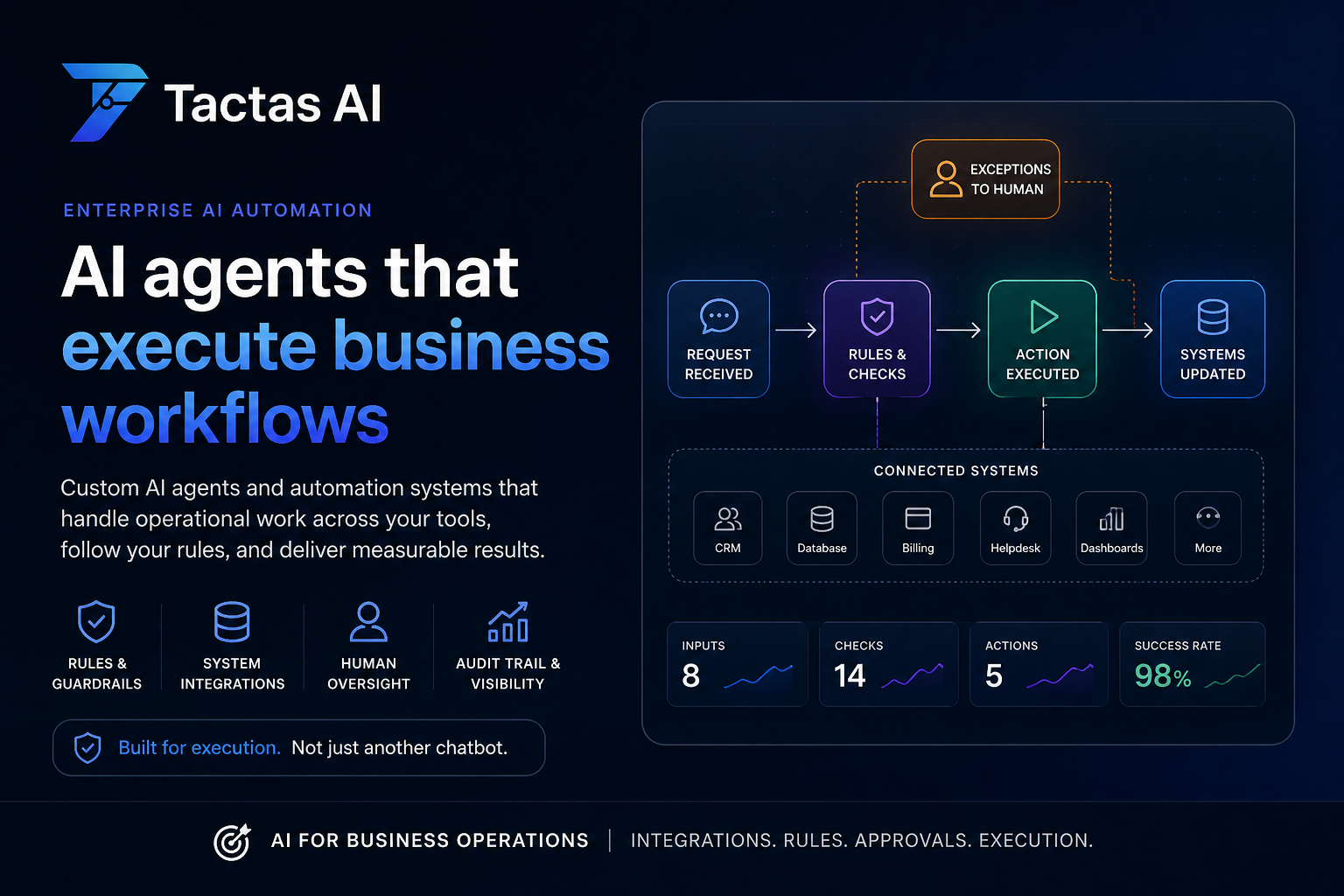
The highest-value healthcare AI automation use cases are administrative workflows with high volume, clear rules, and safe handoff points.
Patients ask about availability, preparation, forms, referrals, insurance details, and next steps across phone, email, portal, and chat.
One request can require scheduling rules, patient records, forms, eligibility tools, billing notes, and staff judgment before action.
Administrative automation must separate routine answers from clinical risk, privacy constraints, and decisions that require licensed staff.
Tactas focuses on clinic workflow automation, AI patient intake, appointment scheduling support, document collection, billing prep, and supervised handoff.
Reduce repetitive front-desk intake while keeping clinical questions and urgent requests routed to qualified staff.
Support administrative tasks such as appointment requests, document collection, reminders, and patient FAQs.
Prepare scheduling requests, collect missing details, explain administrative next steps, and route exceptions.
Automate repeatable office workflows across forms, portal messages, patient support, billing prep, and staff handoff.
Answer non-clinical questions while escalating symptoms, medication, diagnosis, or treatment questions to humans.
Start with a measurable workflow such as intake, reminders, document collection, or billing question routing.
Each AI support agent is designed around your intake process, scheduling rules, forms, privacy boundaries, and existing operating stack.
Collect visit reason, demographics, preferred times, referral details, and missing information before staff review.
Prepare appointment requests, answer administrative scheduling FAQs, send reminders, and route exceptions.
Request forms, IDs, insurance cards, referrals, images, and pre-visit documents with clear status tracking.
Classify administrative requests, enrich cases, draft staff-ready summaries, and escalate clinical questions.
Collect payer details, route eligibility questions, prepare billing follow-up, and keep sensitive decisions reviewed.
Keep PHI access, approvals, escalations, audit notes, and human review boundaries visible to the operating team.
Tactas AI is built around your existing tools, not a generic chat widget. Agents can gather administrative context, prepare actions, and log every step.
The first healthcare AI workflow should be measurable and bounded. Intake is often a strong starting point because the volume is high, the required details are known, and clinical questions can route to staff.
01
A patient asks for an appointment and mentions symptoms in a portal message.
02
Preferred times, contact details, existing patient status, insurance, and required forms.
03
The agent does not diagnose or advise; clinical or urgent indicators trigger staff handoff.
04
The team receives a concise request with missing information, source context, and next steps.
05
Every intake step, handoff, note, and follow-up recommendation stays reviewable.
Keep the first deployment narrow enough to control, but important enough to prove value in front-desk load, response speed, or intake completion.
Start with intake, scheduling support, reminders, document collection, or billing question routing.
Define PHI access, escalation rules, clinical handoff triggers, approval paths, and staff review points.
Run real scenarios for incomplete forms, appointment changes, urgent language, billing questions, and portal messages.
Go live with logs, monitoring, human review, exception alerts, and tuning from real operational feedback.
No. Tactas AI healthcare workflows are designed for administrative automation. Clinical questions, urgent symptoms, medication changes, diagnosis, and treatment decisions should route to qualified staff.
Tactas AI designs around access control, logging, escalation boundaries, and your compliance review process. Final privacy and regulatory requirements depend on your systems, vendors, policies, and deployment model.
The best first workflow is usually patient intake, appointment request preparation, reminders, document collection, billing question routing, or non-clinical FAQs because the volume is frequent and measurable.
Yes, if the workflow is supervised. Routine administrative answers can be prepared or sent based on rules, while clinical risk, urgent language, PHI-sensitive actions, and exceptions can require human review.
Share your care setting, current systems, request volume, and the administrative workflow you want to improve first. We will help define a supervised workflow with clear handoff and review rules.